
Dental Implant Treatment Timeline: From Consultation to Your Final Tooth
Quick answer: Dental implant treatment usually involves several appointments over months. The sequence includes assessment, any preparation, implant placement, healing and fitting the final tooth. Bone healing alone can take around three to six months in many cases; extractions, grafting and the type of replacement can extend the overall plan.
The decision in context
If you are considering dental implants in Neutral Bay, ask for a timeline covering the whole treatment. A surgery date tells you when the implant goes in, but it does not tell you when you can expect the final crown or which appointments come before it.
This guide focuses on planning a replacement tooth from the first consultation onwards. For day-to-day care after placement, read our separate dental implant recovery guide.
The stages of implant treatment
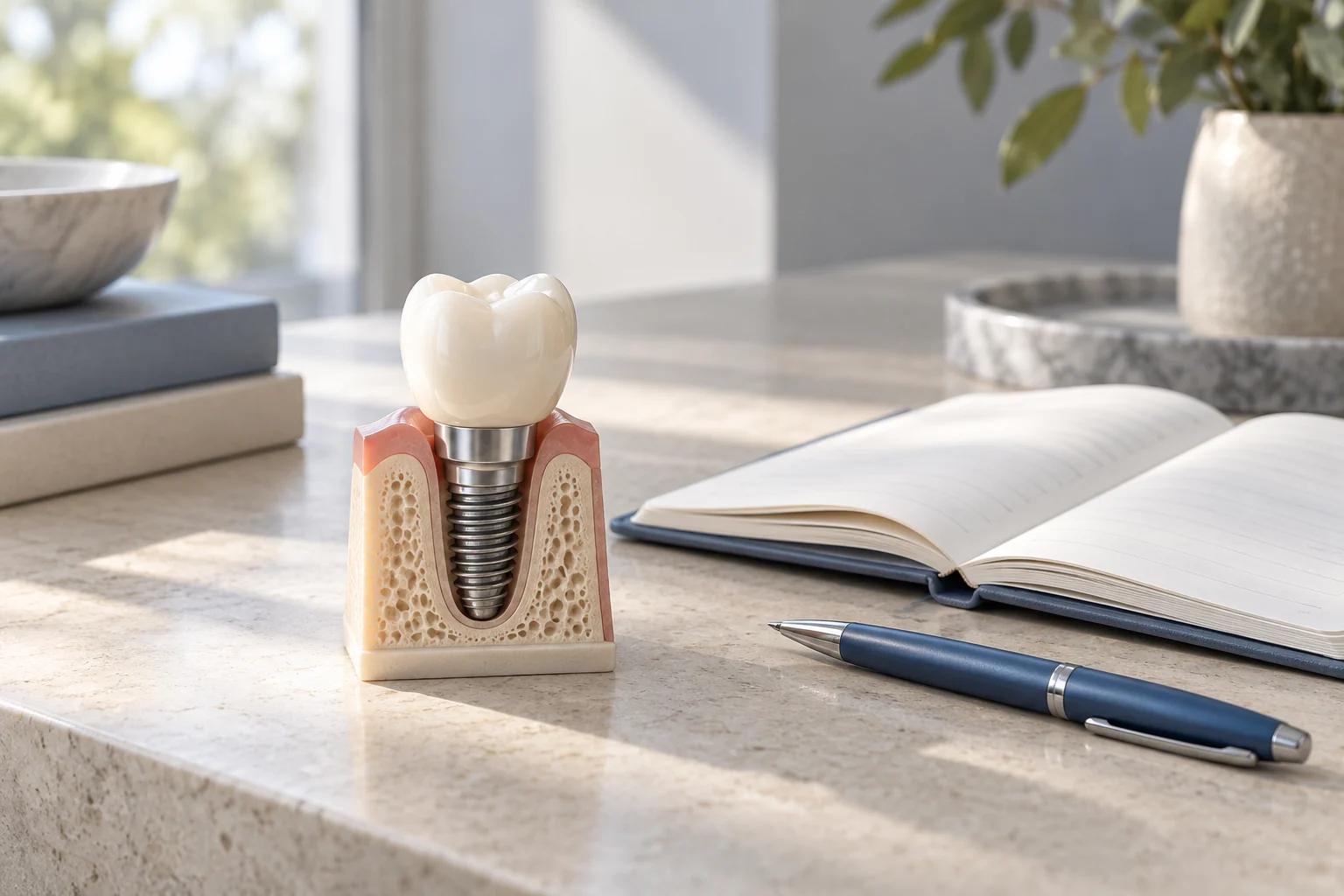
An implant replaces a tooth root. The visible replacement tooth is a separate part of treatment. Healthdirect’s dental implant overview describes treatment as a staged process over several months.
| Stage | Purpose | Question to ask |
|---|---|---|
| Assessment and planning | Check your mouth, health and replacement options. | Is an implant suitable, and what are my alternatives? |
| Preparation, if needed | Address problems or prepare the implant site. | Do I need an extraction, gum treatment or graft first? |
| Implant placement | Position the implant in the jaw. | What recovery and follow-up arrangements should I plan? |
| Healing and reviews | Assess how the implant is healing. | What must be checked before the final tooth is made? |
| Final restoration | Make and fit the crown, bridge or denture. | How many fitting visits are included? |
| Ongoing care | Maintain the implant and surrounding tissues. | What cleaning and review plan will I need? |
Use these stages to discuss your own plan. They are not a fixed appointment schedule.
Your first consultation: establish the starting point
Your dentist needs to assess the missing tooth or teeth, gums, available bone and wider health history. Bring a current medication list and mention relevant medical conditions. Healthdirect explains that these factors form part of the suitability assessment and that imaging helps the dentist plan placement.
Ask which problem the proposed treatment is solving. Replacing one missing tooth calls for a different discussion from replacing an entire arch. If a tooth is still present, ask whether keeping it is an option before discussing its removal.
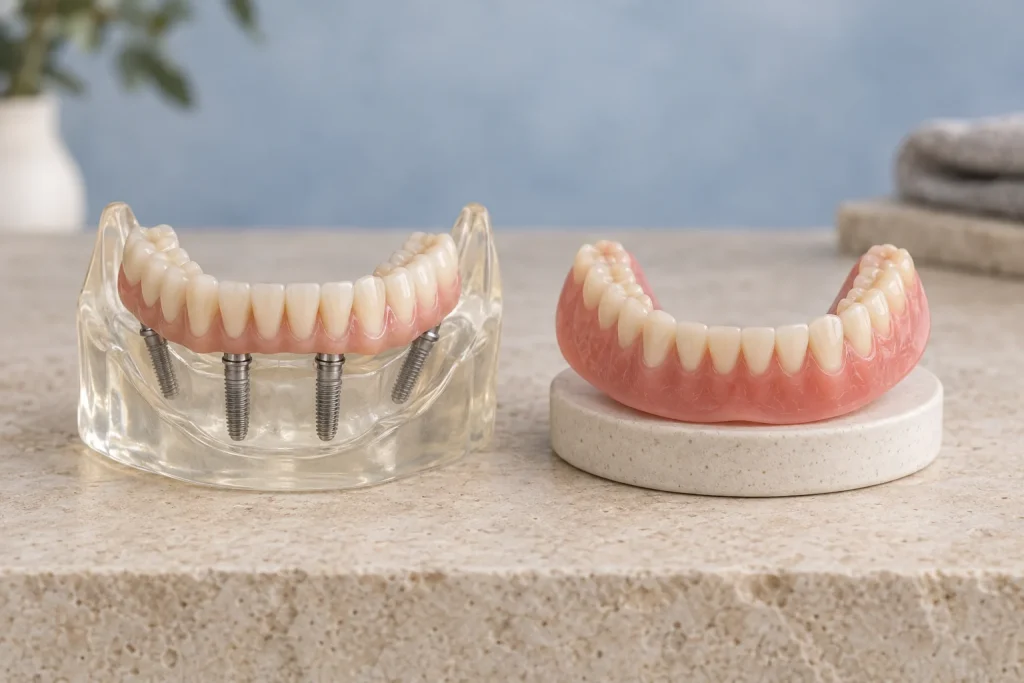
You should also understand alternatives. Our implant versus bridge comparison explains questions to raise when replacing a single tooth. For a full arch, the All-on-4 versus dentures guide addresses a different treatment decision.
Preparation can change the overall timeline
Some patients can proceed to implant placement after planning. Others need preparation first. Cambridge University Hospitals’ restorative dentistry guidance explains that insufficient bone may require grafting and that additional procedures can prolong treatment.
If bone grafting is proposed, ask where it sits in the sequence. Will it be performed before placement or at the same appointment? What assessment determines readiness for the next stage? Get the answer recorded alongside the quote so you can see which visits and procedures are included.
Tell the clinic about travel, work commitments or an event you are planning around. An early discussion is more useful than treating a preferred finish date as a clinical deadline.
Placement and early recovery are one part of the process
Before surgery, ask about anaesthesia, transport, the first review and a temporary tooth if appearance is a concern. If sedation is planned, obtain its specific instructions in advance.
Guy’s and St Thomas’ NHS patient guidance describes possible soreness, swelling, bruising and bleeding after placement. Recovery varies with the procedure. Follow your treating team’s instructions for cleaning, food, medicines and activity rather than adopting another patient’s routine.
Allow flexibility around the surgical appointment. Ask who to contact if symptoms concern you and how the clinic handles reviews. Feeling ready to return to normal activities does not establish that the implant is ready for its final tooth.
Healing: why there may be months between visits
Bone needs time to heal around the implant. Cambridge University Hospitals describes an integration period commonly lasting three to six months, sometimes longer. Your clinician decides when the implant is ready for the restorative stage.
A review is a decision point, rather than a guarantee that treatment moves forward that day. Ask which appointments are provisional and what happens if healing takes longer than expected.
Some plans include a temporary replacement during this period. Confirm whether yours does, what it is intended to do and any restrictions on wearing or biting with it. Avoid assuming that a temporary tooth has the same role as the final restoration.
The final tooth needs its own appointments
Once the clinician considers the implant ready, the restorative stage makes and fits the visible replacement. Depending on the plan, this may be a crown, bridge or denture. Cambridge University Hospitals notes that the type of restoration affects treatment time.
Ask how impressions or scans, laboratory work and fitting visits appear in your schedule. Check whether the quoted finish date means the first fitting, completion of adjustments or a later review. These details help you compare plans that use different definitions of “finished”.
Implant surgery has risks, including infection and injury to nearby structures; an implant may also fail to integrate. Ask how a complication would affect your treatment choices, time and cost. No general guide can predict the outcome for your mouth.
A checklist for comparing treatment plans
Use the same questions for each written proposal:
- Which tooth or teeth are being replaced, and what alternatives have been discussed?
- Which preparation procedures and reviews are included?
- Is a temporary tooth included, and what restrictions apply?
- Which dates are estimates, and what could change them?
- Are the final restoration, fitting visits and adjustments included?
- What happens to the plan and fees if an extra procedure becomes necessary?
- What ongoing cleaning, maintenance and review costs should I budget for?
Our Sydney dental implant cost guide can help you read the quote alongside the schedule. Keep both documents together and request clarification before committing.
Discuss a timeline for your own treatment
Contact Elite Dentistry to discuss an implant assessment in Neutral Bay. Bring your questions about preparation, temporary teeth, healing and the final restoration. Ask for the stages in writing, with clear estimates and an explanation of what may change.
This article provides general information and does not replace an examination, informed consent or instructions from your treating dentist. Implant surgery carries risks. Suitability, healing, treatment duration and outcomes vary between patients.
Medically Reviewed by Dr Angelo Economos
Principal Dentist at Elite Dentistry Neutral Bay. Bachelor of Dental Surgery with Honours (University of Sydney, 1994) with 30+ years of clinical experience in cosmetic, restorative, and implant dentistry.