

Dental Implant Recovery After Surgery: The First Days and the Months That Follow
Quick answer: Your gums often settle over the first one to two weeks after implant surgery, while the implant can take months to bond with the jawbone. Soreness, swelling or bruising can occur early on. Your own recovery instructions depend on the surgery, any grafting or extraction, your health and the restoration your dentist has planned.
The decision in context
The first days after surgery and the wait for a final tooth are different parts of recovery. You may feel ready for normal activities while the bone is still healing around the implant. Knowing that distinction helps you plan work, meals and follow-up visits without treating a generic timeline as a promise for your case.
Elite Dentistry offers dental implants in Neutral Bay. If you are weighing treatment, its implant cost guide explains how the clinical stages affect a written quote. This guide focuses on care after placement.
Implant recovery at a glance
| Stage | What patients may notice | What the dentist checks |
|---|---|---|
| Surgery day | Numbness wears off; mild bleeding, soreness or swelling may start. | You receive instructions for the specific surgery and any medication. |
| First 2–3 days | Swelling and tenderness may be more noticeable; bruising can develop. | Contact the clinic if symptoms exceed the advice you were given or bleeding does not settle. |
| First 1–2 weeks | The gum often becomes more comfortable as the wound heals. | A review may assess healing and any stitches. |
| Following months | Bone heals around the implant below the gum. You may feel well before this stage finishes. | The team decides when the implant can support the planned crown, bridge or denture. |
These are broad stages, not appointment dates. Cambridge University Hospitals’ patient guidance describes a review around one week after surgery and says bone healing commonly takes three to six months, sometimes longer. The timing changes with the site and procedure.
Surgery day: follow the instructions for your procedure
Before you leave, your dental team should explain how to manage bleeding, discomfort, food, cleaning, medicines and any temporary tooth or denture. Keep those instructions where you can find them. They take priority over an online article because the team knows whether you also had an extraction, bone graft or other treatment.
A small amount of bleeding or oozing can occur. The Guy’s and St Thomas’ NHS implant guide also lists soreness, swelling and bruising as possible effects. Contact your dentist if bleeding continues despite the measures in your discharge instructions. Seek urgent care if bleeding is heavy or you feel unwell.
If you had sedation, follow the separate advice about transport, driving, work and supervision. Do not apply a timetable from someone who had local anaesthetic alone.
The first few days: swelling, meals and cleaning
Swelling can become more noticeable over the first days. The amount varies with the extent of surgery and your body’s response. Pain should become manageable under the plan your dentist gave you; worsening symptoms deserve a call rather than an assumption that they are routine.
Your team may suggest softer foods, a change to brushing around the surgical area and a particular mouth-rinse routine. Ask exactly when to resume cleaning at the site. Different procedures call for different instructions, and good care of the rest of your mouth still matters. Avoid putting pressure on a healing implant with a temporary denture unless the dentist has adjusted and cleared it for use.
Work and exercise depend on how you feel, the type of work you do and whether the surgery involved grafting, multiple implants or sedation. Plan some flexibility for the first days. Ask the clinic for advice suited to your job rather than booking a fixed return date from a general guide.
Weeks one and two: the gum heals before the bone
The gum often becomes more comfortable over the first week or two. Your dentist may review the site and remove stitches if they do not dissolve. A comfortable gum does not mean the implant has finished bonding with bone.
Tell the clinic about a denture that rubs, a loose temporary tooth or a bite that puts pressure on the site. A temporary restoration serves a different purpose from the final crown or bridge, and your clinician may need to adjust it during healing.
The following months: why the final tooth may wait
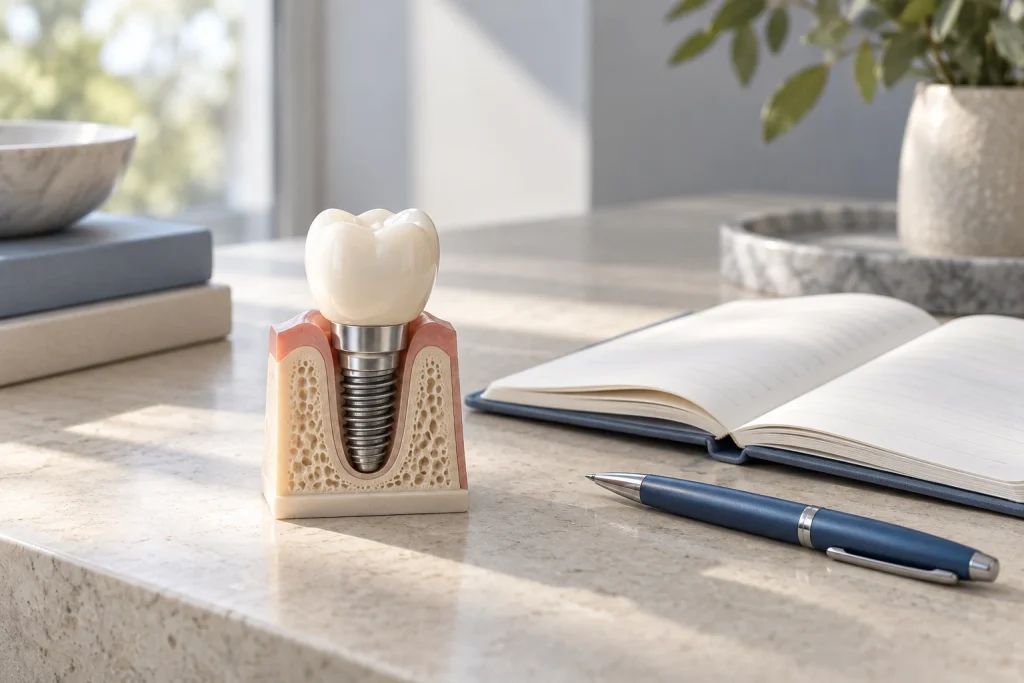
An implant is a support placed in the jaw. The bone needs time to heal around it before the dentist can judge whether it is ready for the planned restoration. Cambridge University Hospitals describes an integration period of about three to six months in many cases. Some treatment plans include a temporary tooth; others leave the implant under the gum during healing.
An extraction or bone graft can add stages. A graft may take place with implant placement or months before it. The position of the tooth, bone quality, gum health and number of implants also affect the sequence. Your dentist should explain the expected stages and the points where the plan may change.
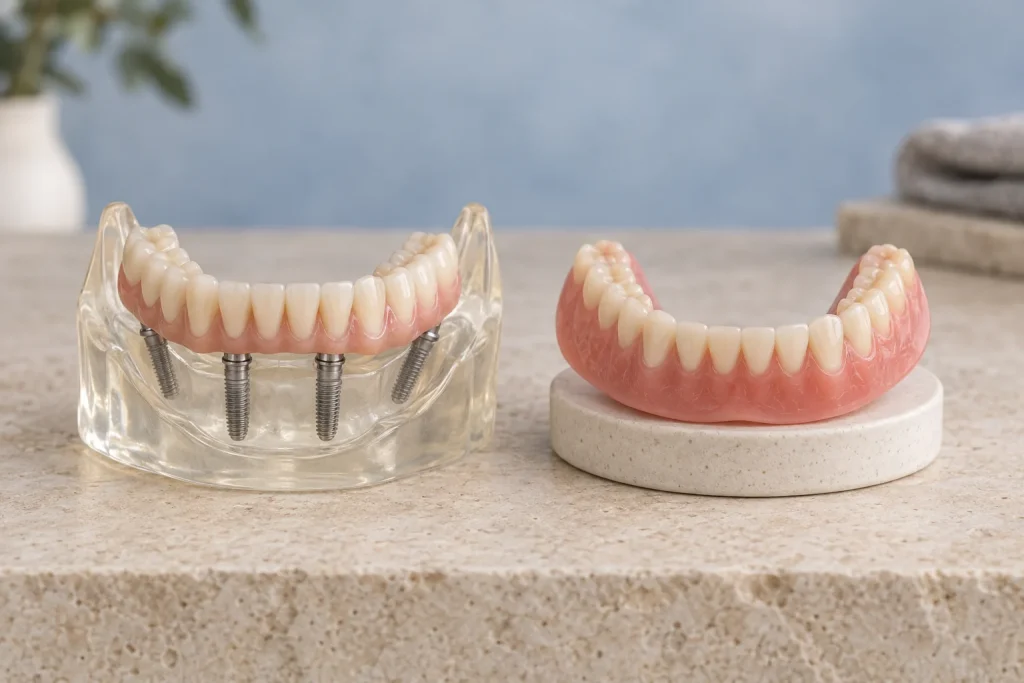
If you are replacing one tooth, the implant versus bridge guide can help you compare the treatment paths. If you are considering a full arch, the All-on-4 versus dentures guide covers a different scale of treatment and recovery planning.
When to contact your dentist
Call your treating clinic if you have bleeding that does not settle with its instructions, pain or swelling that gets worse after an initial improvement, a bad taste or discharge, fever, a loose restoration, or a change in sensation that concerns you. Your team can decide whether a review is needed. For severe bleeding, trouble breathing or another urgent symptom, seek emergency care.
Keep your scheduled reviews even if you feel well. The dentist checks healing and the implant’s readiness for the next stage. After the final tooth is fitted, daily cleaning and regular professional care remain part of looking after the implant and surrounding gums.
Frequently asked questions
How long will my mouth feel sore after a dental implant?
Soreness varies. Some patients have discomfort for several days, while additional procedures may change the experience. Follow the pain plan your dentist gave you and call if pain increases or the medication advice does not help.
Can I work the next day?
Some patients return to non-strenuous work soon after a straightforward procedure. Your job, the number of implants, sedation and any grafting can change that plan. Ask your treating team for a personal recommendation.
Does a healed gum mean the implant is ready for a crown?
No. The gum can close in weeks while the bone continues to heal around the implant for months. Your dentist decides when the implant is ready for the planned restoration.
Will I have a temporary tooth while the implant heals?
That depends on the position of the missing tooth, the stability of the implant and the wider treatment plan. Ask about temporary teeth or denture adjustments during your consultation.
Plan the recovery as part of the treatment
At an implant consultation, ask for the expected stages, the recovery instructions for each procedure and the likely timing of reviews and the final tooth. The team can explain how an extraction, graft or temporary restoration may affect your plan. For an existing postoperative concern, contact Elite Dentistry rather than waiting for a routine visit.
This article provides general information and does not replace the instructions from your treating dentist, an examination or urgent medical care. Implant surgery has risks. Recovery, complications, treatment stages and outcomes vary between patients.
Medically Reviewed by Dr Angelo Economos
Principal Dentist at Elite Dentistry Neutral Bay. Bachelor of Dental Surgery with Honours (University of Sydney, 1994) with 30+ years of clinical experience in cosmetic, restorative, and implant dentistry.



1 comment