
Long-Term Dental Implant Care: Cleaning, Reviews and Changes to Report
Quick answer: A healed dental implant still needs daily cleaning and professional review. Ask your dental team to demonstrate care for your particular crown, bridge or denture and agree on a review schedule. New bleeding, swelling, discomfort or movement should prompt a call rather than waiting for the next routine visit.
The decision in context
This guide concerns ongoing care after healing and after your restoration has been fitted. If you have recently had surgery, follow your treating clinician’s instructions. Our separate dental implant recovery guide covers the early recovery period.
For people considering dental implants, maintenance belongs in the treatment discussion alongside surgery, fees and alternatives. For people who already have one, the useful question is whether the current cleaning routine reaches the areas their dental team has identified.
Know which restoration you have
An implant supports replacement dental work, which may be a crown, bridge or denture. Ask the team to explain which parts are fixed, whether anything is designed for you to remove, and how you should clean around it.
Keep a copy of your treatment records where available. If you move or change dental providers, ask how information about the implant and restoration can be transferred to the new team. Tell a new dentist when and where treatment took place and whether anything has changed since then.
Do not assume a cleaning video for a removable denture applies to a fixed implant bridge. The demonstration should match your own restoration, the spaces around it and your ability to reach them.
Make daily cleaning practical
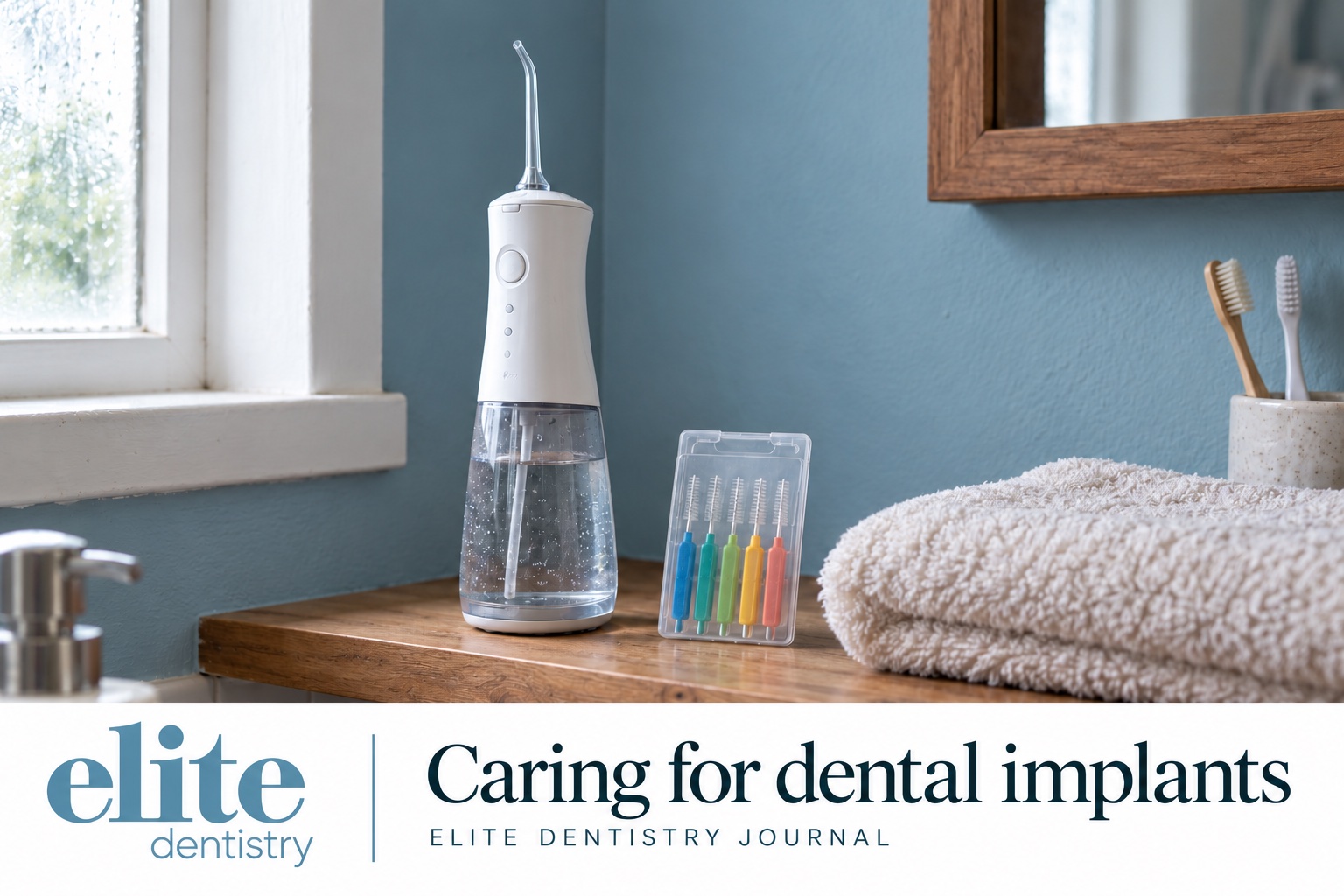
Healthdirect’s implant guidance recommends brushing twice daily after healing, cleaning between the implant and neighbouring teeth, and regular dental checks. It identifies floss, interdental brushes and water flossers as possible cleaning aids.
Ask which tools suit your restoration and how to use them. A useful appointment includes a demonstration and an opportunity for you to try the technique. If an area is difficult to reach, say so. Ask about an alternative approach rather than forcing a tool into a tight space.
Before leaving, check that you know:
- Which surfaces and spaces need attention each day.
- Which cleaning aids and sizes the team recommends.
- Whether the routine differs from care of your natural teeth.
- What to do if cleaning causes discomfort or recurrent bleeding.
If hand movement, vision or another practical difficulty affects cleaning, explain it during the visit. Advice should be workable at home, not just clear while someone else demonstrates it.
Agree on a review schedule for your circumstances
There is no single appointment interval to copy from a friend. Ask your treating team when to return and what would make them recommend an earlier visit.
A published consensus report on implant maintenance supports individualised maintenance based on risk factors, home care and the restoration’s design. Professional reviews can include assessment of the tissues around the implant, cleaning and imaging when indicated.
Tell the dentist about changes to your health, medicines, smoking or cleaning routine. Keep the scheduled reviews even if you have no particular concern. If you miss an appointment, contact the team to arrange another and ask whether the delay changes the plan.
Report changes rather than diagnosing them yourself
Contact your dental team about new or recurrent bleeding around an implant, swelling, discomfort, discharge, a persistent unpleasant taste or any feeling of movement. Describe what changed and when it began. These signs need assessment; an online article cannot establish their cause.
Ask how urgently you should be seen. Healthdirect advises having swelling or inflammation around an implant checked and treated. A review does not automatically mean the implant has failed, but neither can the absence of severe pain confirm everything is healthy.
Do not try to tighten, glue or reshape implant components yourself. If a part comes away, keep it and tell the clinic. For serious symptoms such as difficulty breathing or swallowing, seek emergency medical help immediately. Our dental emergency guide explains when urgent help matters.
Clarify responsibility for future care
Ask who will provide routine maintenance and who to contact if the restoration needs assessment. This is especially useful when surgery and restoration were completed by different providers, or treatment took place away from home.
Request clear information about the fees for reviews and professional cleaning, and how possible repairs or replacement would be assessed. Do not assume ongoing maintenance is included in the original treatment fee or that a warranty covers every future problem. Ask for any applicable terms in writing.
If you are still deciding about treatment, compare those responsibilities with the alternatives discussed by your dentist. Our implant versus bridge guide is a starting point for that conversation. Implant treatment involves surgery and can have complications; a maintenance plan does not remove those risks or guarantee how long treatment will last.
Ask about an implant review in Neutral Bay
Contact Elite Dentistry to discuss an implant review or questions about ongoing care. If another provider placed your implant, mention that when enquiring and ask which records to bring. Describe any current symptoms when making contact.
This article provides general information about healed dental implants. It does not replace an examination, diagnosis or your treating clinician’s post-operative instructions. Care requirements, risks and outcomes vary.