
Dental Crown vs Veneer: What Is the Difference?
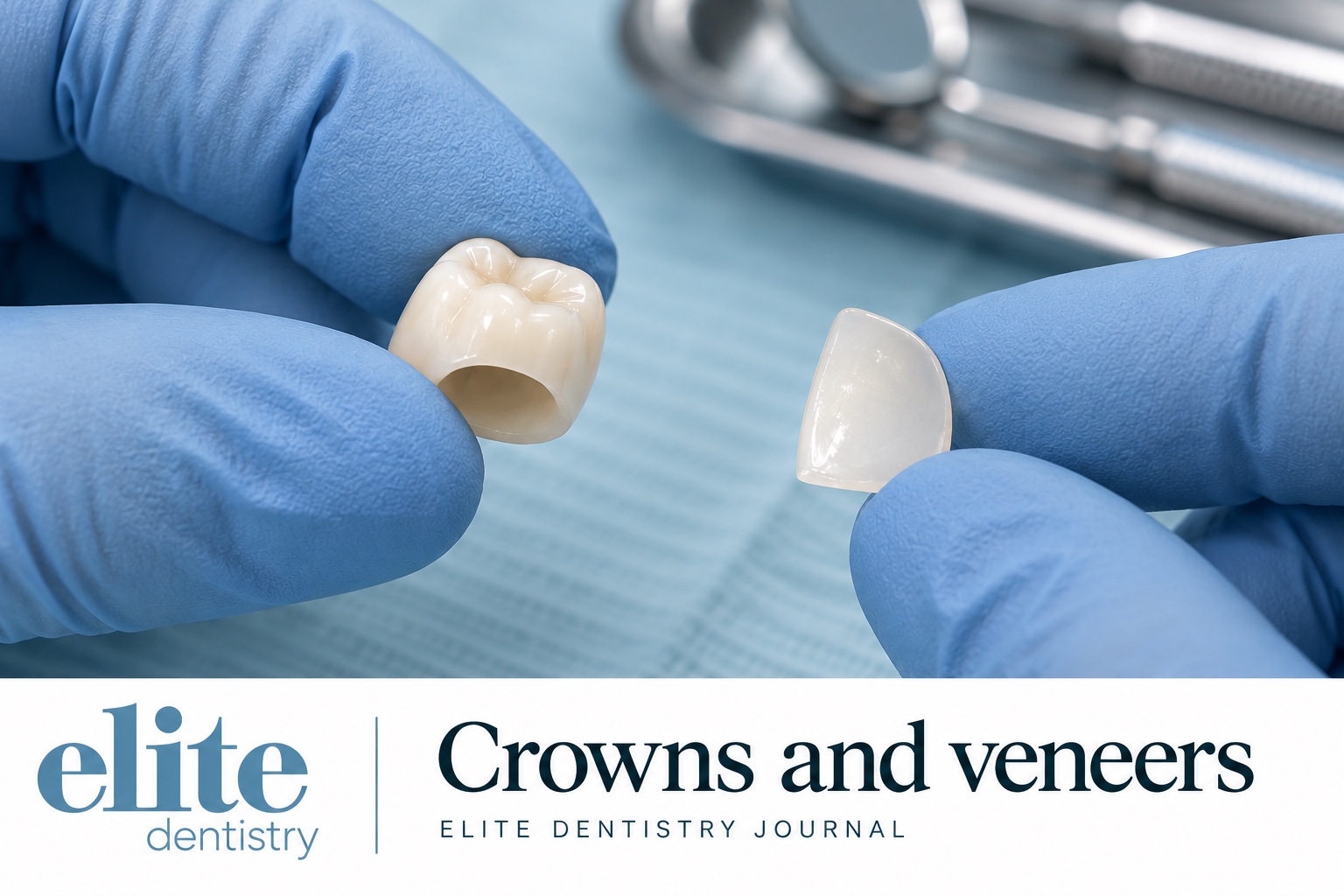
Quick answer: A crown covers the prepared visible part of a tooth more extensively; a veneer mainly covers its front surface. Choosing between them depends on the remaining tooth, existing damage, your bite and the purpose of treatment. They are not interchangeable cosmetic packages.
The decision in context
A tooth that looks uneven in a photograph may have a very different treatment need from a tooth with a large filling or fracture. Ask what the examination shows before comparing restoration names or colours.
Elite Dentistry provides dental crowns and porcelain veneers in Neutral Bay. This guide helps you understand the distinction and prepare questions for an assessment.
Coverage and purpose are the starting point
The Australian Dental Association describes a crown as a restoration fitted over a reshaped natural tooth. A veneer is a thin covering bonded to its front. Both can affect appearance, but the amount and condition of the remaining tooth matter to the choice.
Cleveland Clinic’s crown guide explains that crowns may restore weak, broken, decayed or worn teeth. A veneer is generally considered for appearance concerns where a suitable tooth can support it. Neither description establishes which restoration you need without an examination.
| Question | Crown | Veneer |
|---|---|---|
| What does it cover? | More of the visible tooth, including surfaces around it. | Mainly the front surface, sometimes including an edge. |
| What may lead to discussion? | A weakened, damaged or heavily restored tooth. | Selected concerns about appearance, shape or colour. |
| Does the tooth need preparation? | Tooth reshaping is normally required. | Preparation depends on the proposed restoration and tooth. |
| Is it a one-time lifetime solution? | Future repair or replacement may be needed. | Future repair or replacement may be needed. |
Why the remaining tooth matters
Ask your dentist to show you the tooth and explain the findings. Is there a crack, decay, a large existing restoration or wear? How much sound structure remains? Which finding is the proposed treatment intended to address?
A useful explanation should connect the restoration to a specific problem. If the recommendation is a crown, ask why a smaller restoration would not be suitable. If it is a veneer, ask whether there is enough appropriate tooth structure for bonding and how the bite affects the plan.
You do not need to choose from a treatment menu before that conversation. It is reasonable to request clarification when two estimates use different restoration names for the same tooth.
Understand preparation before agreeing
Both options can involve permanent changes to a natural tooth. Do not assume that a treatment labelled minimal preparation means no enamel removal. Ask exactly which surfaces will be altered and why.
The American Dental Association’s veneer advice emphasises that enamel removal makes treatment irreversible and that grinding or certain bite relationships can affect suitability. Our guide to veneer preparation and risks discusses that commitment in more detail.
A digital preview or proposed shade can help communicate appearance preferences. Ask separately about the clinical reasoning, the limits of any preview and the consequences of preparation. Those decisions should be clear before treatment starts.
Discuss alternatives and possible complications
A crown or veneer is not automatically the smallest appropriate treatment. Depending on the findings, ask whether tooth-coloured fillings, a partial-coverage restoration, whitening, orthodontic assessment or monitoring deserves consideration. Availability and suitability need confirmation for your tooth.
Cleveland Clinic identifies sensitivity, fracture and possible decay around a poorly fitting crown among crown concerns. Ask which risks are relevant to the proposed treatment, how complications would be managed and whether any additional treatment could be needed.
Request an estimate that identifies the restoration for each tooth, any preliminary work and what happens if the treatment plan changes. A headline fee alone cannot explain those differences.
Plan for care after treatment
The Australian Dental Association notes that teeth with restorations can still decay and that crowns and veneers may need further treatment. Ask how to clean around your restoration, when reviews are recommended and whom to contact if it becomes loose or uncomfortable.
Keep the written plan and the details of the restoration. If you later seek a second opinion or need a repair, knowing what was placed and why makes the conversation easier.
Ask for a tooth-specific explanation
Contact Elite Dentistry for an assessment in Neutral Bay. Bring any previous treatment plan and ask the dentist to explain the condition of each tooth, the proposed restoration, alternatives and maintenance before you decide.
This article is general information, not a diagnosis or an individual treatment recommendation. Crowns and veneers can involve irreversible preparation and carry risks. Suitability and outcomes vary.