
Porcelain vs composite veneers: which option may suit you?
Porcelain and composite veneers can both change the visible shape, colour and balance of a smile. The better choice depends on the condition of your teeth, the scale of the change, your priorities and the treatment your dentist considers suitable.
In this guide
Neither material is automatically better.
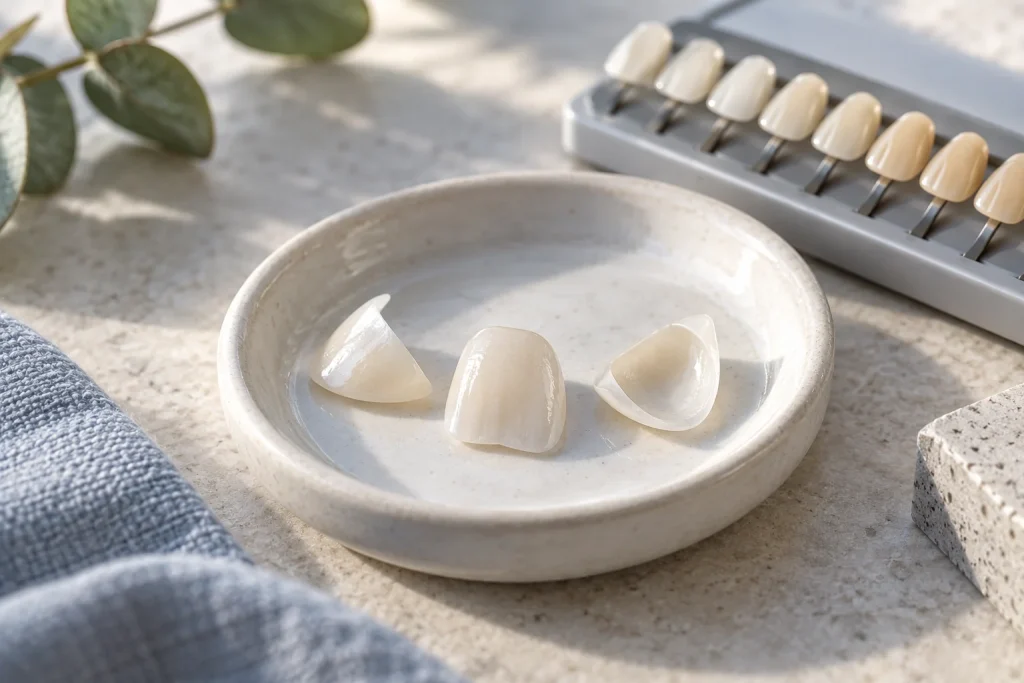
Composite veneers are shaped directly on the tooth using tooth-coloured resin. Porcelain veneers are custom-made outside the mouth, usually by a dental technician, and bonded to the tooth at a later appointment.
Composite may suit a smaller change, a more conservative starting point or a patient who prefers a lower initial commitment. Porcelain may suit a broader smile design where surface texture, shade stability and detailed laboratory work are priorities. Your bite, enamel, gum health, existing fillings and habits such as grinding all affect the decision.
Start with the problem, not the material. A cosmetic consultation should first establish what you want to change and whether veneers are the safest way to achieve it. Whitening, orthodontic treatment, bonding, crowns or no treatment may be more appropriate in some cases.
How porcelain and composite veneers differ.
Composite veneers
Composite resin is placed and shaped directly on the front surface of the tooth by the dentist. Treatment can often be completed in one appointment, although several teeth or more complex planning may require additional visits.
- Created directly in the dental chair
- Often involves a lower initial fee
- Can be repaired or adjusted in many situations
- May be useful for chips, small shape changes or selected gaps
Porcelain veneers
Porcelain veneers are made to a planned shape and shade by a dental laboratory or ceramicist. The process usually requires at least two appointments and may include a preview or temporary stage.
- Custom-made outside the mouth
- Allows detailed control of texture, translucency and proportion
- Usually involves more planning and a higher initial fee
- May suit a broader or more detailed smile design
The Australian Dental Association’s consumer information describes both composite resin and porcelain as established veneer materials. It also notes the practical difference: composite is applied directly by the dentist, while porcelain is made in a laboratory and normally requires multiple appointments.
Compare the decisions that matter.
| Consideration | Composite | Porcelain |
|---|---|---|
| How it is made | Shaped directly on the tooth | Custom-made outside the mouth |
| Appointments | Often one, sometimes more | Usually at least two |
| Initial investment | Often lower | Usually higher due to planning and laboratory work |
| Repairs | Often repairable in the chair | Damage may require laboratory repair or replacement |
| Shade and surface | Polished resin matched to surrounding teeth | Layered ceramic can provide detailed texture and translucency |
| Best fit | Selected smaller or staged changes | Selected comprehensive or highly planned changes |
This comparison is general. The amount of tooth preparation, appointment sequence and expected maintenance vary by patient and treatment plan.
What should be checked before you choose?
A veneer decision begins with the health and structure of the tooth. Your dentist should assess your enamel, existing restorations, gums, bite and the amount of space available for the proposed material.
- Oral health: active decay or gum disease generally needs attention before cosmetic treatment.
- Tooth structure: previous fillings, cracks or heavy wear can change what is appropriate.
- Bite and grinding: excessive forces may affect design, material choice and maintenance.
- Scale of change: a small chip is a different problem from changing the shape and colour of several teeth.
- Future maintenance: both options require good hygiene, review and possible repair or replacement over time.
Elite Dentistry’s porcelain veneer cost guide explains why the number of teeth, planning process and any preparatory care affect a personalised estimate.
Questions to ask before deciding.
- Are veneers the most conservative suitable option for my concern?
- What changes can I realistically expect from each material?
- Will any tooth structure need to be removed?
- How will the proposed shade and shape be previewed?
- What maintenance, repairs or replacement may be needed?
- Would whitening or alignment first reduce the number of teeth requiring treatment?
Ask to understand the full process, alternatives and written fee estimate before treatment begins. A responsible plan should be based on your teeth and goals, not a fixed number of veneers or a standard smile shape.
Porcelain and composite veneer FAQs.
Can composite veneers be replaced with porcelain later?
Sometimes, but the decision depends on the tooth structure, existing composite, bite and the condition of the tooth. Your dentist needs to assess the teeth before recommending a change.
Do both options require tooth preparation?
Preparation varies. Some teeth may need little or no reduction, while others need reshaping to create space and a stable result. The proposed preparation should be explained before treatment.
Can veneers correct crooked teeth?
Veneers can change the visible shape of selected teeth, but they do not move tooth roots. Orthodontic treatment may be a safer or more conservative option where tooth position or bite is the main concern.
Will whitening change the colour of veneers?
No. Whitening lightens natural enamel but does not change the shade of porcelain or composite restorations. If whitening is part of the plan, it may be better completed before the final veneer shade is selected.
Plan the result before choosing the material.
Elite Dentistry in Neutral Bay can assess your teeth, bite and cosmetic goals, then explain whether composite, porcelain or another approach may be suitable.
This article provides general information and is not a substitute for individual dental advice. Treatment suitability, risks and outcomes vary.
Medically Reviewed by Dr Angelo Economos
Principal Dentist at Elite Dentistry Neutral Bay. Bachelor of Dental Surgery with Honours (University of Sydney, 1994) with 30+ years of clinical experience in cosmetic, restorative, and implant dentistry.