
Retainers After Invisalign: Wear, Care and What to Do If They Stop Fitting
Retainers are usually needed after Invisalign to help maintain tooth position. Long-term wear is commonly recommended, but the appliance and schedule must be prescribed for you. If a retainer no longer seats fully, causes significant pain or is damaged, do not force it into place. Contact your treating clinician.
Planning beyond the initial treatment
Finishing the last active aligner is a transition to another stage of care. If you are comparing Invisalign treatment in Neutral Bay, ask about retention before starting so you understand the ongoing routine and costs.
Our guide to everyday life with Invisalign covers eating, drinking and cleaning during active treatment. This article explains the decisions that follow when planned tooth movement is complete.
Why are retainers needed after Invisalign?
Teeth can move towards their earlier positions after orthodontic treatment. This is called relapse. Tooth position can also change with age. Retainers help limit unwanted movement, which is why retention remains relevant after the active treatment ends. The British Orthodontic Society explains these reasons for retention.
An aligner is used within a planned sequence to move teeth. A retainer is intended to hold a position. Ask your treating dentist when to move from your final aligner to the prescribed retainer and what to wear while it is being made. Do not assume the final tray is your permanent retention plan.
How long do you wear retainers?
There is no universal timetable. The manufacturer of Invisalign describes an initial period of full-time wear for Vivera retainers, with a possible gradual reduction to night-time wear according to the clinician’s instructions. This is a general pattern, not a schedule to apply to yourself. See the manufacturer’s retainer information.
The British Orthodontic Society recommends thinking of retention as a long-term commitment. Ask for written instructions covering your first weeks, any planned change in hours and later reviews. Your schedule may differ from someone else’s even if you both had Invisalign.
Before leaving the final treatment appointment, make sure you know who to contact if you miss wear time, lose an appliance or notice a change in fit. Ask when your next retention check is due.
Which type of retainer might be recommended?
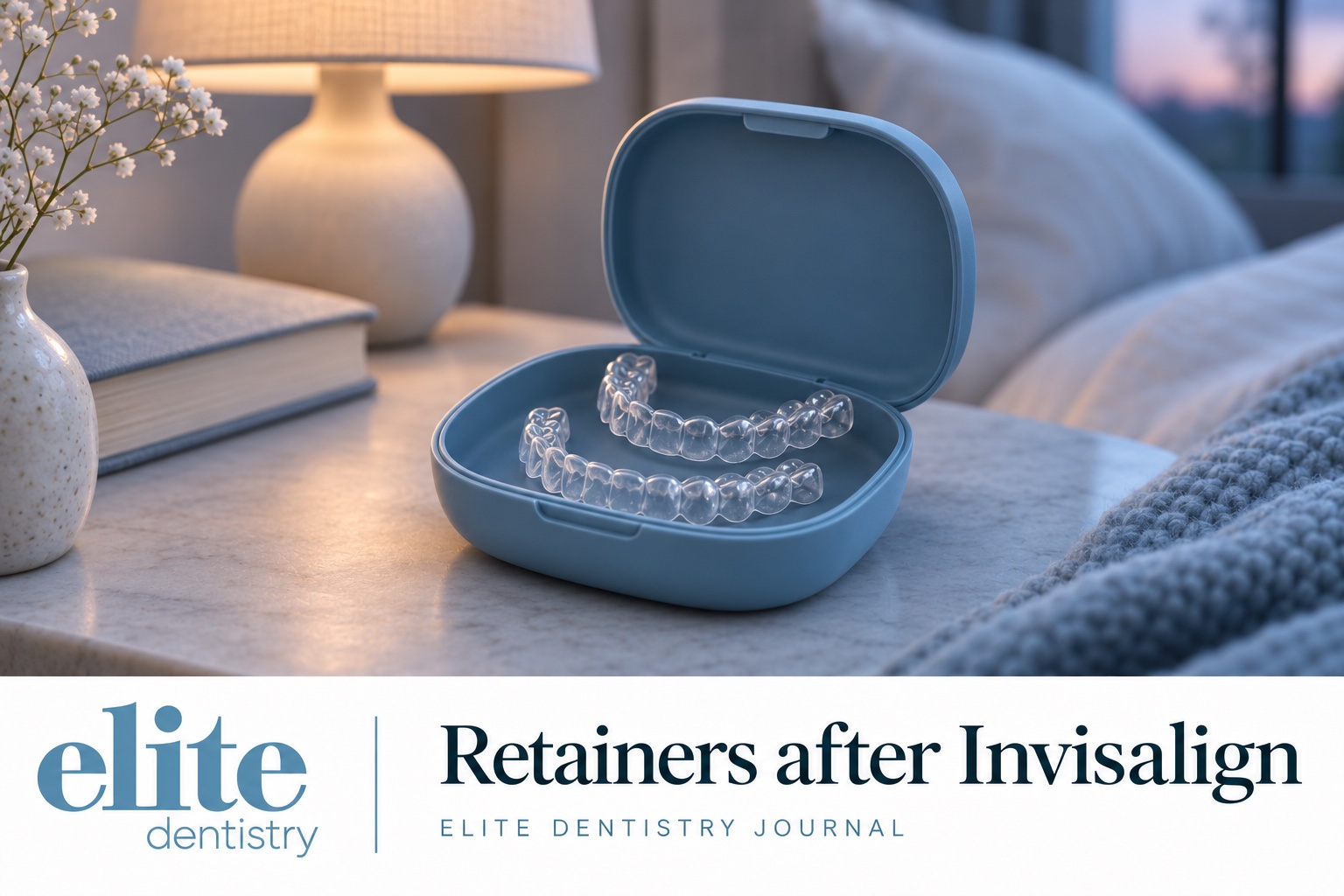
Options include a removable clear retainer, a removable wire-and-acrylic retainer, or a wire bonded behind selected teeth. Sometimes more than one type is recommended. The choice depends on your clinical needs and the proposed retention plan.
A fixed wire needs careful cleaning and checks for looseness. A removable appliance depends on following its wear schedule. The British Orthodontic Society describes both responsibilities in its guidance above.
Ask which appliance is proposed for each arch and why. Vivera is one brand of clear retainer, but your plan should identify the actual device being supplied. Do not assume every Invisalign quote includes the same retainer brand, number of sets or replacement arrangement.
A retainer feels tight or no longer fits
Slight snugness and a retainer that will not fit are different situations. The American Association of Orthodontists advises against forcing a retainer if it does not seat completely, causes significant pain or appears distorted or damaged.
Contact your treating clinician if it sits away from some teeth, repeatedly lifts off, has a crack or broken wire, or requires force to insert. Explain how long the fit has been different and whether you have missed wear time. The problem may involve tooth movement, a change in the appliance, or both.
Do not heat or reshape it yourself. Depending on the assessment, the next step may be an adjustment, a replacement retainer or further orthodontic treatment. An old, tight appliance should not become a do-it-yourself way to straighten teeth.
Cleaning and storing your retainer
Follow the care instructions for your specific appliance. Cleaning products and methods should be compatible with its material. Ask the clinic to demonstrate the routine and explain what to remove it for, including meals and drinks.
The Nationwide Children’s Hospital retainer guide recommends keeping removable retainers in their case when out of the mouth and protecting them from heat. Avoid wrapping one in a tissue where it can be thrown away, and keep it away from pets.
If an appliance is lost or broken, contact the clinic promptly for advice. Do not wait until the next routine check to mention it. Invisalign’s manufacturer also advises contacting the treating clinician about replacement when the last available retainer is lost or damaged.
What should your treatment quote include?
Ask about retention when comparing Invisalign costs and quote inclusions. A useful written plan makes these points clear:
- Which retainers are included, for which teeth, and how many sets you receive.
- When they will be supplied and what you should wear until then.
- Which retention reviews are included and who provides ongoing checks.
- How loss, breakage or a change in fit is assessed and charged.
- Whether replacement scans, impressions or appliances carry separate fees.
Keep a copy with your wear instructions. Knowing the next step makes it easier to act if a retainer is lost while travelling or becomes uncomfortable between appointments.
Plan the next stage of care in Neutral Bay
Contact Elite Dentistry to discuss Invisalign and the retention responsibilities that follow. If you already have a retainer concern, explain the change when booking and bring the appliance to the appointment. Your treating clinician can assess the fit and advise on an appropriate next step.
This article provides general information and does not replace individual dental or orthodontic advice. Retainer selection, wear schedules and treatment needs vary. Follow the instructions given by your treating clinician.